Sunday, August 9, 2015

Cross Cut Shredders

If you don't have one, you should.  I am amazed by how many people throw what they consider to be benign items, into the trash. My rule is, if it contains my name, address, phone number, SSN (of course) or any information what so ever about me, it gets shredded, and that means cross shredded, after which it goes into the recycle. Actually, I frequently shred stuff that really doesn't need to be shredded - but it gets recycled so I see no harm in it. If you have ever been stalked you will do the same. I highly recommend you do so before rather than later - not to mention the risk of identity theft, though I have to say the bank appear to be practically giving that information away, so shredding a few bills will not do a lot of good.

Here is a synopsis of one of the chapter's in my book to explain why I am not being paranoid by shredding everything. (My book is  a memoir and every word in it is true).

When I met Sam he was on the rebound.  I was aware that he was totally obsessed with his ex-girlfriend, but I convinced myself that as our relationship developed, he would forget her.  The strange thing is that he was not really terribly interested in me while we were dating.  He actually told me that I could never live up to his previous girlfriend, whom he still loved.

He was a retired Army officer, of independent means, youthful, active and great fun. A man of honor, he frequently told me.  I started to worry when he told me that he had been watching his ex-girlfriend’s house, and had taken photographs of the license plates on her visitors’ cars. Later looking them up on the Internet. It became obvious that he was spending long hours on the Internet - frequently as many as 8 hours a day, tracking down as much information as he could on the ex-girlfriend and anyone who came in contact with her.  I just hoped that he would get over it.

It was when he told me that he had been by his ex-girlfriend's house one night, and noticing that the next day was garbage day, he threw two big black plastic bags from outside her house, into his truck.  He took those bags home, emptied them out on his kitchen floor and spent the entire night sifting through them.  It really scared me to discover that he found telephone bills, from which he tracked down all the people she called, again using the Internet. He made copious notes about her lifestyle, noting what she was eating, where she was shopping, buying her gas, and many other details - all from her garbage. That day I bought a cross-shredder. And since then I have shredded everything that will go through it, before disposing of it. I was relieved that at least he did not ‘love’ me. I would not be subjected to such attention.

Needless to say, we broke up shortly after that. For a few weeks I heard nothing more of him. Then he started phoning and emailing me.  At first I chatted casually with him, but I began to realize that he was hoping to get back together, and so I avoided contact with him totally. That is when he started phoning me in the early hours of the morning, leaving drunken, abusive messages on my answering machine. Sending me abusive emails.  I continued to ignore him, thinking he would get bored. I was wrong. Things got very unpleasant. One Thursday evening, I headed off for a long weekend of seminars being held in a hotel just outside town. My friend, Kim, was staying in my house while I was gone. She had been visiting from California and was happy to look after the house for me.

I got settled in my hotel room by about 9.30 p.m., when my mobile phone rang and, without thinking, I answered it to hear Sam’s voice - I hung up immediately. At about 10.30 Kim called me to say that Sam had called the house and been abusive on the phone to her. She said that she told him that she was not surprised that I didn’t want to talk to him again. He called her back a few moments later and told her that he would report her to the local police. That was when she called me - she was nervous and frightened at that stage. I calmed her down as best I could, saying that there would be no point in him calling the local police. What could he say to them?  She had done nothing wrong after all.  As we spoke on the phone, I could hear a pounding on my front door - it was now after 11 p.m. Kim was terrified.  With me still at the other end of the phone, she answered the door.  It was the local police - and they had woken the entire neighborhood. They asked Kim if she were me, and in her terror she agreed that she was. Fortunately they didn’t ask for identification. They said that my ex-boyfriend had called them and asked them to come to my home, as he feared that I was in danger from my house guest. Kim managed to convince the police that she was fine and they left.  Immediately, Kimberly packed her bags and headed back to California.

I don’t ever remember being so angry in my entire life. I was furious and as soon I hung up the phone, I dialed Sam’s number and let him have it. I told him that I never wanted to see him again, nor speak to him again. That if he ever came near me, I would report him to the police as a stalker. I thought that would be the end of it.

A number of weeks went by and I heard no more from Sam.  Then a mutual friend told me that Sam had been watching me, and had told her that he ‘knew my every move’. I realized that I was being subjected to yet another form of abuse, and I reported him to the local police, reminding them of the false alert he had called into them previously. They made a note and told me to keep a log of any further contact.  He did contact me again, sometime after that, but luckily I had finally found a man who was honest and good, who really did love me. He warned Sam off and I have heard nothing more from him since.

As always, there is a wiki for that.


Sunday, August 2, 2015

Never leave home without a utility bill

Why? You just never know when you have to prove your identity, and believe it or not, there are still businesses that do not consider passports to be valid proof of identity.

Some time ago I wrote about Customer Service but my most recent experience forces me to revisit this subject. It just amazes me that some companies do not value their customers, nor do they realize how much it damages their business to not pay enough attention to each individual customer. We all have relatives and friends and almost everyone has a Facebook account.

When I left Ireland, 21 years ago, I kept my bank account in the Ulster Bank in Baggot Street in Dublin open. Partly because at that time, I was not certain I would not be returning. I had vowed to give it two years in the US before I made any decisions, but if I did return, it would be useful to have my existing bank account still operational and I really like the Manager and staff there at that time.

Although I decided after six months, that I was going to stay in Texas, I found it useful to have an account in an Irish bank, it was partly nostalgia and partly practical - occasionally I received Irish checks and just had them deposited there for spending money when I visited and, in the first few years, before my US ATM card actually worked in Ireland, it was useful for cashing US checks should the need arise. I never had more than Euro 500 in the account, and in the last few years, I had a balance of Euro 59. I also had a current ATM card for that account.

At the beginning of the year I received a letter from Ulster Bank advising that as my account had been inactive for some time, they would mark it dormant unless I confirmed that I wanted it to remain active. I responded immediately asking them to keep it active as I would be using it on my next visit.

Despite that, when I attempted to use my ATM card in an Ulster Bank ATM machine in Dublin, it was declined as 'Inactive Account'. I called into the bank the following day and after a long wait, I was seated in an open area in the bank, beside a particularly rude man, John Moriarty, an unpleasant, self important man.


It is amazing to me that some people cannot be polite. Nothing he said would have come across as rude, but the tone of his voice, his body language and facial expressions made it an extremely unpleasant experience. I explained that I had requested that my account be maintained active, and that I needed to withdraw Euro 40. He told me that I had received a letter advising me to bring proof of identity to the bank - I had not received any such letter, but he insisted that I had. I handed over my TX drivers licence - with photo and address, the address matching that on my account. I had my US Passport and my Irish Passport, both with photos and both current, and for good measure I had my US Credit Union check book, also showing my address. He said none of these were acceptable. I needed either an Irish drivers licence or a utility bill. I explained to him that I had lived in the US for 21 years and therefore did not have an Irish driver's licence and that I didn't think to bring a utility bill with me when traveling internationally.

The man was so unpleasant (and thankfully I didn't actually need the Euro 40), I told him to give me back my various items of identity and I left. As soon as I got to a computer I registered a strong complaint online with Ulster Bank - I was advised to return to that branch and ask to see a manager, or go to another branch.

Next day I returned to the branch where I had held my account for so long. I asked to see a manager and was immediately swept into a far corner by a young man who assured my that the manager, Gerry Bolger, was on vacation for the entire week. I explained my problem to him and demanded to close my account. He told me I needed a utility bill, at which point I asked him if the Ulster Bank was going to keep my 59 euro because I neglected to carry a utility bill on vacation with me. I also told him that I had registered a strong complaint about his colleague online the previous day and that the customer service representative I had spoken to had advised me to speak with a manager.

Those readers who know me, know that I am not inclined to make a fuss. But that is not to say I won't fight for what I believe is right. I will pick my battles but once I have decided to fight I won't back down. And I didn't back down this time. I refused to budge until finally Mark (that was the whispering young man's name) agreed to override the ridiculous utility bill requirement (I almost wish I had one because I am sure they would refused to accept it as it wasn't from an Irish utility supplier) and finally I was able to close the account and get my cash.

It was with mixed feelings that I left the bank. Triumphant that I had stood my ground and got my money. Sad because I had cut another tie to my past, but proud that I was able to cast off that tie - something I probably should have done long ago. But most of all, sad because my fight was such a small ripple in the ocean of banking and they will never be aware of the negative knock on effect that will most definitely have on their business.

It is really not rocket science. Every customer is important. It is not just the few dollars or Euro or whatever other currency is involved, it is the word of mouth, and with social media as powerful as it is, this is not something to be ignored. But I guess Banks still think they are above that.

I have added to my checklist when packing 'utility bill' - I am guessing I will never need it.


Sunday, July 19, 2015

Procrastination


I have never been a procrastinator, probably part of my possible OCD (see this blog entry). If I have to do something I stress until it is done. I stress partly because I might forget to do it on time, but also I worry that it might take longer than anticipated and if I don't start immediately I could miss whatever deadline had been set.
Take for instance, doing our taxes, I install the tax software the moment it arrives, usually late November, then open it every few days to apply the multiple updates as tax forms and rules change. I watch and wait for the various 1099s and W3s and any other tax documents, knowing full well they won't arrive until the beginning of February. The moment I have all the documentation, I get my taxes done. If I have a refund due, I file immediately and breath a sigh of relief as another task is ticked off. Obviously, if I owe money I won't file until close to the due date - but I put a reminder in my calendar and it is usually about two weeks prior to the final filing date, because I would consider it to be procrastination otherwise.

Annual review time at work tends to cause considerable stress. The moment I get the notification to complete my self appraisal, I am in there getting it done. In a previous job, my boss was a procrastinator and would schedule review for the day before they were due to be completed and submitted. This caused me endless amounts of stress because any form of procrastination disturbs me, not just my own. I guess it all stems from the same source - my absolute abhorrence with being late for anything.

But there is another force in play, particularly when the task is unpleasant or difficult, then I have to deal with it immediately in order to get it over with and so that I can stop thinking about it. And believe me, I find review time very unpleasant, and not because I expect to get a bad review, it is because I find it equally uncomfortable to get a good one. I just find the entire process embarrassing.

Doing some research on the subject I find that the extreme opposite to procrastination is precrastination, which could be considered equally undesirable. The happy medium is being proactive. I would like to consider myself proactive.

The problem I see is that I might just be a precrastinator. In my determination to get things done immediately, I may go at it too fast, where giving the matter more thought and planning could possibly have a better outcome. Take for example, recently we planned a long weekend away. I booked two days vacation at work well in advance, advised everyone I would be out of the office and set my out of office rule, ready to be turned on before I left. Then we thought perhaps the trip we planned would be too much for my mother in law and might tire her out, so we decided to cancel it. The next day I cancelled my two days vacation, deleted my out of office notification and told my colleagues I would not be gone after all. When I got home from work I discovered another change of plan - my mother in law insisted she wanted to go and so the trip was on again. I had to rebook my vacation days and go through the setting notifications and advising colleagues all over again, so instead of saving time I actually tripled my work for that one weekend.

What started me on this vein of thought was the fact that I had fully packed for a trip, 4 days prior to departure. All that was left to pack was my toiletries and makeup. Instead of feeling the relief from getting that major task out of the way, I felt strangely uncomfortable.I felt like I should be doing something, I worried about my clothes being crushed - which of course they will be, but as I will be traveling for approximately 20 hours, I doubt they could get any more crushed. I worry about what I had packed and, more important, what I had not packed. I check and double check, add more items 'just in case' and generally stress every bit as much as I would have, had I left my packing to the last minute. Plus there is a strong likelihood that I will need something from my case before I actually leave. And now I have nothing to do but wait for my departure date.

The problem is that I get way more stressed if I put things off till the last minute, and according to this website, procrastination is extremely damaging to your health.

I would like to work at just hitting the proactive range, but if that is not possible, I will stick to precrastination, being in my mind the lesser of the two evils.


Friday, July 10, 2015

Divorce

There are some aspects of divorce that are the same everywhere - though I have to admit that my experience is limited. Limited to Texas, Ireland and France.

Most people get down and dirty when it comes to any relationship break up, but with marriage, where children and/or property are involved it frequently gets downright nasty.

Here are some differences I have observed - obviously I know more about the Texas divorce because I was personally involved, on the other hand I know that my case was unusual because it was cut and dried and uncontested - all the nastiness had already happened and was over:

Do it yourself in Texas:


I left Ireland in June 1994. At that time I had already been legally separated for almost 5 years. Divorce was not an option - in fact the Irish Constitution banned it. I settled into my new life in Austin TX. One day, while browsing the shelves in Barnes & Nobel I found a book titled 'How to Do Your Own Divorce in Texas'. I had to buy it. It consisted of instructions and sample documents to be filed. The more I read, the more I realized I could do this! I did some research and discovered that although divorce was not legal in Ireland, a divorce decreed in a country / state where it was legal, was recognized by the Irish State, with conditions, the divorcee(s) had to either be citizens of that country, or permanent legal residents. If you read my book, you know this already.

Among the conditions for a do it yourself divorce were that all joint assets had to have been already divided and custody of any children of the marriage had to have been agreed upon. Well, I was already legally separated, all assets had been sorted out at that time and all three children were no longer children, all being over 18. I had to obtain a notarized waiver from my ex husband, indicating that he had no intention of disputing the divorce, and I had to supply a notarized declaration of intent to never return to live permanently in Ireland. Both documents were easily acquired, and once I had them I filed the papers in Williamson County, TX. It would be 10 weeks before a court date was set.

While I counted down to the court date, I read and reread the instructions in the book. I would be expected to stand up before the Judge and state my case. List the reasons for the divorce, the example given was 'reconcilable differences'. I carefully prepared my speech. I would explain that we were already legally separated, all assets had been divided as part of that separation, all children were over 18, I had a notarized waiver from my ex husband. Everything was in order and I had put in for the morning off work, was as ready as I would ever be.

As is my habit, I was at the courthouse 30 minutes before it opened for business. It was a chilly, windy winter morning and I was already a bag of nerves as I stood outside shivering, waiting for the doors to open. At last I made my way through the security checkpoint and found the court room where Judge Carter (now Congressman Carter) was presiding. It didn't surprise me to discover I was the first to sign the book, stating my case and ticked the box for 'pro se', found a seat and sat there going over my lines.

I suspected it would be first come, first served and was relieved that I was top of the list, more especially as the court started filling up as self important people is smart suits bustled in with papers and books. I was going to be nervous enough standing up there speaking without having a huge audience. Ah but I forgot that in such an environment it would be the lawyers time that would be considered most valuable. Therefore anyone who was not 'pro se' (that was everyone but me) would be heard first. As I listened to each case - all uncontested divorces - I realized that the words in the book were exactly what I should have prepared to recite tunelessly, just as each lawyer in turn did. But it was too late now, I would just freeze up if I didn't follow what I had been practicing. And in my usual perverse way, I wanted to do it my own way.

Finally, after about 2 hours, it was my turn. I stood in front of the Judge and went through my speech, he didn't look like a judge to me, no wig or gown, just a grey haired man watching me with a look of mixed amusement and surprise on his face. When I finally reached the end of what I had prepared, I waited in anticipation - would he grant the divorce or would he find some flaw in my argument? He lent forward and said "And what made you decide to come to Texas?". So, not only did I have to present my case in front of all those people, I then had to explain that I had won a Green Card in the lottery and I came to Texas because of my love of Country & Western music, the history of the wild west, Davy Crockett & the Alamo and John Wayne - of course as always, I then had to explain that I knew John Wayne was not from Texas, but to me, through his movies, he represented the history of Texas and the West. Judge Carter listened with obvious amusement and the banged his gavel and granted my divorce. I went back to work.

Ireland:

In November 1995 there was a referendum to remove the ban from the constitution, it passed by 51%-49% and in June 1996 divorce was available in Ireland, though not very easily so. The requirements were very stiff.

This year, almost 20 years later, what is one of the more stressful events in a persons life, is still a long and expensive process in Ireland. It takes a minimum of 5 years, and considering that the marriage has probably been unbearable for sometime before that, that is is a very long time to have to maintain a less than normal life and deal with the stress -  not to mention cost. The cost of maintaining separate homes, who lives in the family home and what about the children? Of course, all of the details around home and children are usually sorted out with the legal separation which is available after one year of living apart. The divorce, which can cost anything from EURO 2,000 to EURO 25,000 is available for those who can afford it, 4 years after the separation. That 4 year wait is obligatory, for what reason I do not know.

Obviously if you can agree to terms and draw up the papers without the assistance of a judge, the cost will be less, though still more than most can afford.

France:

It is impossible to figure out what they think they are doing in France. More so than any other country, in France it is who you know, and if you happen to be married to a man who is violent, by French law you better just sit tight and take a beating, because according to this web site:
"It should be noted that a spouse who leaves the family domicile without a court authorization may be deemed under French law to have committed a "fault" giving rise to significant financial consequences. Thus, a spouse should avoid doing so until it has been possible to consult with French counsel"
The woman I know, ran for her life, to a police station and filed a report. Here is the strange thing, the report vanished, ceased to exist. The fact that her spouse was military, and her sister in law was a Gendarme might have had something to do with that, otherwise we must believe that the French police are very inefficient. Like any other country, there is very little you can do about people signing false affidavits to ensure that marital property is not shared evenly.  But it is hard to believe that after a 16 year marriage, living and working together to make a home, a divorce settlement results in the battered female owing the triumphant military 'gentleman' a large sum of money to pay for the fact that she lived with him rent free? And that was not a compensation for standard of living because he was earning a healthy income while she was unemployed - due to having to escape from his violence. That was a result of fraud and perjury.

I guess the moral of this story is don't get married? or perhaps the real lesson is - study the laws of the land carefully no matter where you live, not just divorce laws but if you see a divorce in your future, that is when you have got to educate yourself, because learning about it after the fact is frequently too late.


Wednesday, July 1, 2015

Writing as a therapy


Peeling The Onion by Aideen Walsh
Available on Amazon

I wrote my book (Peeling the Onion) purely as a therapeutic exercise - in fact it was not intended to be a book, it was a series of essays, I was urged to publish it by so many people I did so to quiet them more than for any other reason. But a secondary reason was the thought that perhaps some people could benefit from reading about my experiences. Writing each chapter was sufficient for my purposes.

I didn't realized that this was a recognized form of therapy until I decided to expand on it here, and doing some google searches informed me I was not the first to come up with this idea.

It struck me how writing about the main discomforts experienced with the ladies' toilets in our new office had minimized considerably, if not eliminated, my issues with it. I now just accept the way it is.

Then, more recently, expressing my annoyance on my Facebook status, at the tuneless whistling in the office seemed to reduce my irritation. I am guessing that is why most people take to their status to express joy, excitement, dread, irritation and sadness - it helps.  It really does help just to write it down.

According to this article:
"Over the past 20 years, a growing body of literature has demonstrated the beneficial effects that writing about traumatic or stressful events has on physical and emotional health."
As I mentioned, there is a lot of information to be found on the Internet regarding the benefits of writing, in particular in keeping a journal. Many of the articles I found recommend keeping your writing secret, for me, it really didn't matter if it was never read again, or read by the entire world. Just putting it on paper (or the electronic equivalent) helped.

I suppose what helped me most about it was that in order to write, I had to organize my thoughts, then examine and reexamine them, then face and accept my reactions, and in doing so, let go of a whole lot of emotional garbage surrounding the memories. Frequently allowing suppressed memories to surface resulting in an emotional purgative.

Somehow, putting it all into words, while in no way invalidating my feelings, started the healing process. I was able to let go of the resentment, and accept the injustice. The benefits were immediate and ongoing.

Here is what I found with just a very rudimentary google search:

The process is better explained in this article:
The most substantial effect at play is perhaps the cognitive process of taking apart our experience and configuring it for the telling. As leading theorist in writing therapy James Pennebaker explains, “The development of a coherent narrative helps to reorganize and structure traumatic memories, resulting in more adaptive internal schemas.” The result? Having given language to traumatic experiences, we’ve in a sense contained their potency. The chronic stress they’ve induced – and the corresponding physiological impact like weakened immune function, systemic inflammation, hormonal imbalance, and impaired cardiovascular function – diminishes.
Psychology Today:
Over the past few decades the therapeutic power of writing has been discovered. Old people are encouraged first to learn to write but then to tell their story.

The task can require serious, introspection: an attempt to make sense of the past. To examine it from various angles rather than simple to try to shift blame onto others.
BJPsych Advances
Writing about traumatic, stressful or emotional events has been found to result in improvements in both physical and psychological health, in non-clinical and clinical populations.
Good Therapy deals with keeping a journal as a therapeutic exercise

And finally, the good old wiki page.


Saturday, June 20, 2015

Back in the toilet

Seriously, I am not obsessed with toilets, despite the fact that I have written a few times around the subject. There was most recently the toilet roll discussion, and quite a long time ago I wrote about the toilet seat positioning, then there was a piece dealing with the inadequacies of the toilet in the office where I previously worked.

This time, I am  back in the toilets at the office - different office. This is a brand new building, in fact it isn't even completed - the top floor is still windowless and unfinished. But we moved in this month (not into the top floor of course) and immediately the toilet grabbed my attention. I suppose it is relatively normal, after all, apart from the hours spent at my own desk, the only other place I visit with any frequency is the ladies bathroom. Don't get me wrong - I don't run to the toilet every 20 minutes. But it is one place that cannot be avoided.

I suppose I get frustrated when things are not done right, and yes, I guess that means right according to me, after all that really is all I have to judge by.

But when I explain it to you, I am sure you will agree. The first and biggest annoyance is the fact that the stall doors do not have any display to indicate occupancy or vacancy. Yes, there are locks, but they are not the kind that slide a polite sign, red or green or 'occupied'  or 'vacant'. This problem could be tolerated if it were not for the fact that the doors have springs on them, so when you exit the stall, with the best will in the world, you can't leave the door open to show that it is available. It closes quietly but firmly behind you.

So, as I see it, you have three or four options. You can shove on the door to see if it will open - something I hate to do in case (as has often happened) someone has not locked the door and screams and embarrassment follow. Or, you can hunker down and peer under the doors, I am not keen on that idea because if someone came in while I was doing that, I could be accused of being a somewhat disgusting pervert. You could listen carefully outside each door to see if there were any sounds that might give a clue - again could be considered somewhat perverted. Finally, you could yell out 'anyone in there' like the cleaning crew do. I am not comfortable with the yelling idea either.

I reluctantly settled on a variation of the first choice. I walk briskly in as though heading for the last stall in the row, but casually push each door I pass with just one finger - if it moves without any screams from within, I nip into that stall. I might add that while I am there, should someone else come into the bathroom, I cough loudly so that they don't have to exercise their favorite method to locate an empty stall. Perhaps a sign on the inside of each stall 'Please cough while in situ' might help.

There are a few other things about these bathrooms that bother me, albeit less than the absence of a occupied sign.


On the wall opposite the stalls there are two .. things ... I am not sure what they are. They look like magazine racks. So I guess they are intended either for magazines for those who have time and inclination to linger over their ablutions, or else they are for placing paperwork or laptops while hurrying between meetings. So far I have never seen them being used by anyone.


Come to think of it, so far I am the only person I have ever seen in the bathroom closest to my office. One of the many bonuses of working in a male dominated occupation.


Another minor annoyance is the appallingly bad tile work on the walls. I mean seriously, I have tiled many walls and floors, and without training, I could do a better job. Thankfully it is not on the floor because the tiles are so uneven, someone would surely trip.


And last, but not least is the fact that there is a very nice sink, with a faucet that is motion activated, but the soap dispenser is not, and it is very close to the faucet. One must take great care when pumping the soap dispenser, to avoid activating a spray of water all over one's arm. I am trying to get into the habit of making sure my sleeves are well rolled up before pumping soap, at least I can dry my arm if it accidentally gets sprayed.


Oh and that is another thing I forgot, the paper towel dispenser is crammed full of very small pieces of paper - like the size of a Kleenex, and no matter how carefully you try to extract just enough to dry your hands (and possible one arm) - which I must say is quite a few pieces - you will get a big chunk of them come out, way more than you need.

It is all such a waste because I am sure that it cost quite a bit to put this inadequate bathroom together.


Thursday, June 11, 2015

Parenting


Being a parent is probably the single most difficult and definitely the most rewarding experience of my life, seeing what amazing parents my own children have become is my ultimate reward, but recently one of my nieces, now a mother herself, told me that she modeled her parenting style on me. Not only was that a huge and unexpected compliment, it also brought home to me how much our behavior will influence children, and not just our own children. It is a mistake to think that just because they are children, and don't appear to notice, they are not being influenced by everything around them, and in particular, by the behavior of the adults in their lives.

This appears to be the current definitive definition of parenting, according to my research:
"Parenting (or child rearing) is the process of promoting and supporting the physical, emotional, social, and intellectual development of a child from infancy to adulthood. Parenting refers to the aspects of raising a child aside from the biological relationship." Davies, Martin (2000). The Blackwell encyclopedia of social work 
This definition would indicate that parenting ends at some 'adulthood' point. It doesn't. You can't switch it off. At least, assuming the parenting switch is on, it can never be switched off, this wiki is in agreement with me on that point.
"Parenting doesn't usually end when a child turns 18. Support can be needed in a child's life well beyond the adolescent years and continues into middle and later adulthood. Parenting can be a lifelong process. " Wiki.
There is no way to train for parenting. Yes there are all sorts of classes and websites that claim to prepare you, but as every child is different and the learning experience never ends, no amount of training can prepare you. From the moment of conception, everything you do for the rest of your child's life, has a bearing on how they develop, physically, mentally and emotionally. We learn on the job and we never stop learning, and we never stop making mistakes, the hope is that the mistakes are few and do not cause lasting damage - and most of all, that we learn from our mistakes.

Frequently we learn our parenting skills (or lack thereof) from our own parents - and this is not always a good thing, for some it is possible to observe our parents mistakes and not repeat them, but for others the sad truth is that is not always the case. Many people who were abused as children will in turn be abusers but fortunately not all. I believe it takes a mixture of compassion, intelligence and imagination to get past our own childhood experiences and avoid 'visiting' the sins of our fathers upon our own children.

Some people do not have it in them to be parents, other than biologically, and for them the scars they leave on their children can often be lasting and deep.

I found this very interesting article by Kathy Caprino in which she quotes Dr Tim Elmore on the 7 Damaging Parental behaviors that keep children from becoming leaders:
  • We don't let our children experience risk
  • We rescue too quickly
  • We rave too easily
  • We let guilt get in the way of leading well
  • We don't share our past mistakes
  • We mistake intelligence, giftedness and influence for maturity
  • We don't practice what we preach
What is interesting about this list is that the inverse is also equally bad:

  • We let our children run wild
  • We are never available when needed
  • We never praise
  • We accept no guilt or responsibility
  • We burden our children with our problems
  • We fail to recognize intelligence and giftedness 
  • We don't preach - don't communicate and don't lead by example

And with the second last item - many parents recognize giftedness - such as a talent for some sport, and instead of allowing their child to enjoy their talent they push too hard, attempting to live vicariously through their child, taking the fun out of it and frequently destroying all interest the child may have in pursuing the activity.

To that list I can add a few more to produce, not necessarily leaders, but well adjusted adults and potentially good parents.

I believe the following:

Accept responsibility for your mistakes and apologize

It is impossible to go through life without making mistakes, parenting is the same as anything else, we will make mistakes. But by accepting responsibility and apologizing for those mistakes, we not only reduce the damage they could potentially cause, we also teach our children an important lesson.

Sometimes parental behavior goes beyond mistakes and that thin line is crossed into emotional, or even physical abuse. It is a fact that the most abusive of parents will perpetuate the damage they do by continuing to deny they have done anything wrong. This is a very good article on why this happens. For those who suffered abuse as a child, here is an article on how to get past it.

Another good quote from Robert Brault


It is never OK to beat a child.

For as long as I can remember, my grandmother could command absolute attention and perfect behavior with just her eyes. She never raised her voice, she never raised her hand. Chapter One of my book describes how she did it:
"There were rules to be obeyed and the only punishment incurred for breaking those rules was the ‘Look’. It was all she had to do to stop us in our tracks. She would slightly widen her flashing eyes, and pierce our bodies with a stare, nothing more. Just one look and then she returned to the sweet Granny immediately. She never prolonged the punishment, nor even needed to lecture us. We behaved and she forgave and forgot." Peeling The Onion, Chapter One

It is never OK to use a child as a 'weapon' or ask them to take sides

When parents argue, the child should never be drawn into the argument, never be forced to side with one parent. This is most common, and most damaging when a marriage ends and there is shared custody. An inadequate parent will use the child, or children as weapons to hurt the other parent - and they end up doing irreparable damage to the child, and ultimately permanently damaging their own relationship with that child.

There should be consequences NOT punishment

This is a very good article on the difference. Consequences will also be different for each child, and some punishments will devastate one child and have no effect on another. For example I know of a man who frequently locked his very young son in a dark and cluttered garage as a punishment, this child had a fear of the dark and was absolutely terrified for the entire time - in serious danger of suffering emotional injury. When the same father attempted to use this punishment on his second son, the effect was entirely different - that boy had no fear of the dark and an insatiable curiosity, he spent the time happily investigating the rusty old tools left carelessly lying around and climbed over old furniture and clutter, in serious danger of suffering physical injury. Of course, this was most definitely abusive behavior. He was a man without compassion and without imagination, despite his own miserable childhood, he treated his children as he had been treated himself.

The rules and associated consequences for breaking them should be clear

And should be enforced consistently. Children need boundaries and they need to be able to trust their parents to protect them. Setting and enforcing boundaries consistently give a child that sense of security. Boundaries should remain constant.

There should be rewards for achievements

However, as with item number 3 in the first list - rewards should be earned and not lavished for no good reason. Just as in real life - sometimes achievement is its own reward. To constantly praise for mediocre performance is to prevent your child from excelling and also will not prepare them for the real world. Conversely to not recognize effort, but keep demanding more than the child is capable of, will eventually cause them to stop trying.

It is never right to denigrate a child

Most children have fragile egos and building or damaging their self esteem depends almost entirely upon a parents attitude. To denigrate a child, or to compare them unfavorable with their siblings is a major mistake and frequently one that cannot be corrected.

Be honest

Always, taking into account a child's age and what they can handle, be honest. Children can tell if you are not. A simple example: I sucked my thumb, actually into adulthood, and might have managed to give it up, given the warnings of damage to my teeth and germs etc; however when I was about six years old, a friend of my parents told me I would grow a thumb down the back of my throat if I didn't stop. I knew that was not possible, knew he was making it up and as a result, doubted everything that had been said and continued to suck my thumb. I also never trusted that man again.

It is wrong to tell a child a lie because making the truth easy for them to understand is difficult, or uncomfortable. Where do babies come from? NOT from a stork, or under a mushroom. If you can't be honest with your children, do not expect them to be honest with you. That comes under the heading of practice what you preach.

Be a parent

It is possible to be both parent and friend, but be a parent first and foremost, be a parent that your child can trust enough to come to when they are in trouble, be a parent your child is comfortable confiding in. And above all else, listen to what they say to you - really listen.


Tuesday, May 12, 2015

Piggy in the middle


Anyone remember that game?

It summarizes what it is like to be a middle child. You are stuck between two others passing the ball over your head as you desperately try to catch it. It is pretty much the opposite of dodge ball, instead of trying to hit someone with the ball, you are trying to avoid them touching the ball.


According to the Cambridge Dictionary, the definition of Piggy in the middle is:


Once the 'piggy' has caught the ball, they get the opportunity to not be in the middle, and whoever threw the ball has to be the piggy. A loose ball is free for all. So, not exactly like being a middle child.

I was very surprised to discover how much has been written about the effects, both good and bad, of being a middle child. It was slightly amusing to notice that most of what has been written - by people qualified in medicine and / or psychology - was written by middle 'children'. Also, the definition of a middle child appears to apply to any child who is neither first of last in a group of siblings. Therefore, all children who are not the oldest and not the youngest, are middle children. The true middle child, in my opinion is the 2nd of only three children.

The term is then extended to make exceptions for gender - for example if the oldest and the youngest of three are boys, and the middle child is the only girl in the family, then she, apparently, doesn't experience the same 'middle child' syndrome as say, the middle of three boys, or three girls.

Am I a middle child? Depends on how you look at it. I always felt like I was, and I was the middle of three girls, but the third of six siblings. According to all I have read, given the order in which we were born, I am a middle child. We were, boy, three girls (me in the middle) then two boys.

Here is a very good definition of middle child syndrome - and it also explains why such a syndrome exists. I must admit I can relate to a lesser degree - being the middle of three girls, my older sister naturally got new clothes, I got to wear her old clothes when she had outgrown them but by the time I was finished with them they were not worth passing down so my younger sister got new clothes. It is very strange the apparently small injustices we hold on to - forever it would seem - because I still feel a mixture of sad and angry when I think of my confirmation outfit - my older sister's cast off confirmation outfit. Yes, my younger sister got a new outfit for her confirmation.

However, on the positive side, many of the traits that helped me to reach for, and grasp so many opportunities in my life are as a result of that very syndrome, assuming it truly does exist. I figured out early on that nothing is handed to you, you have to go out and get it.

I gathered a list of middle child traits from a number of websites, many of which were identical and so I guess all copied from the same source. Here are the main ones:
  • You are independent
  • You are happy doing your own thing
  • You are tough
  • You think outside the box
  • You are happy to not be the center of attention
  • You are not afraid to take risks
  • You are more likely to fly under the radar at extended family gatherings
  • You are empathetic towards others
  • You are a lot more well adjusted than you may appear
I have to admit I think that kind of describes me. I do like this from Psychology Today - advice for middle children:
  • The amount of parental attention you received as a child doesn't define how well you turn out.
  • Sometimes you need to be able to walk away, especially when you are being taken advantage of.
  • Sometimes you need to step up to the plate - like when there is conflict you simply can't avoid.
  • You are moderate and well balanced by nature, so don't be afraid to rock the boat once in a while.
I felt neglected and left out as a child, but I suspect any child in a large family feels like that, as a teenager I started to appreciate the fact that I truly appeared to be invisible a lot of the time and as an adult I really appreciate the fact that I am independent and not afraid to take risks.

I don't think I suffered any more than my siblings, nor do I think I had any greater advantages, just different. And the bottom line is not what cards you are dealt, but how you play your hand that is important. Ultimately, as I mentioned in a previous blog entry - we are responsible for our own lives, happiness and outcome.

I repeat what has become my mantra:  If you don't like it, change it!


Friday, May 1, 2015

I will #banbossy!


A long time ago, I discovered quite by accident, that I was very bossy, at least that is how it was defined back then. This trait was not very apparent when I was growing up because I was so painfully shy that speaking to anyone other than immediate family was extremely difficult. It is not easy to be bossy if you can't speak.

Looking back, I am amazed that I actually attempted to correct this quality - for yes, had I been male it would have been admirable, but that was then.

We are moving into an era where it is fast becoming a quality in women also, thanks to people like Sheryl Sandberg, COO of Facebook and founder of LeanIn.org and #BanBossy and I find myself having to work to reverse the damage done by a relatively expensive 3 day training course for Executive Secretaries.

I think the exercise that exposed my behavioral quirk was designed to foster team cooperation - at least that is the only plausible answer I can find for it. Back the, I was what was called an Executive Secretary - now referred to as an Administrative Assistant. There were about 20 of us on the course being held at the Irish Management Institute. For this particular exercise, we were divided into teams of 5. Each team was given a task to complete within 15 minutes and our efforts to accomplish this was captured on video. We were sent to a recording booth and the timer started.

I had come down with a very bad head cold just before the course started and that probably helped to reduce my patience and counterbalance my natural shyness. The task we had been set was "we were a group of staff members in large factory and we were responsible for arranging social activities. We had to plan an outing and get the word out to the entire staff immediately", we had to document the outing and how we planned to get the word out.

The minutes ticked away and we were sitting there self consciously doing pretty much nothing. I couldn't stand it any longer and the bossy came out. In other words, I took charge. We got down to planning and every time someone got side tracked I pulled them back to the task at hand - I forgot to mention I am also very competitive and I didn't want our team to fail.

We succeeded in our task within the allotted time. Then, when all the teams had finished our videos were played along with critiques invited from all the attendees and supplemented by the instructor. We were the only team who actually completed the exercise, but I was heavily criticized for being too bossy. Needless to say I was mortified, I had stepped outside my comfort zone and as a result all attention was on me - the bossiest trainee in the room.

Looking back on it, I am not very surprised that I didn't at least get some recognition for being successful, that was the early 1980's and it was still not very acceptable for women to 'take charge'. But to this day I fight to overcome that horror of being bossy but if you take a look at the definition of bossy - I was NOT bossy I was taking charge.. As Shery Sandberg says:  When a little boy asserts himself, he's called a “leader.” Yet when a little girl does the same, she risks being branded “bossy.”

I WILL #BANBOSSY!

Sunday, April 26, 2015

Toilet Rolls & Paper Towels

It is very strange the things that people get worked up about. One thing, the toilet seat positioning, I wrote about before. And remaining in the toilet, there is the paper roll replacement issue, though the paper towel roll replacement in the kitchen could come under the same heading.


I bring this up because I am guilty of feeling hard done by when I find just an empty cardboard roll and I feel that I am the only person who replaces it. I do feel strongly that to use the last of either roll and just walk away without replacing it is just plain inconsiderate.


Then there is the 'almost' replaced roll. The empty cardboard roll hangs on the holder, but someone has found sufficient energy to place a new roll on top of it, just couldn't quite muster up that extra effort to put it on the roller - or, they manage to get that far, but can't quite figure out how to dispose of the empty roll - goodness knows the Internet is cluttered up with whole websites dedicated to things to do with empty toilet rolls. Pinterest has 1001 ways to use them!


I know for a fact that I am not the only person who replaces either roll. I have actually seen my husband replace the paper towel in the kitchen, and I frequently find fresh, untouched toilet paper in one or other of our bathrooms, leading me to believe that someone other than myself, replaced it.

But yet people do complain when they have to replace a toilet roll, mind you, once replaced that opens up another can of worms - was it replaced correctly? There is a wiki dedicated to toilet paper orientation.


In our house, there is a right way and a wrong way to replace the paper towel in the kitchen also. Of course you probably read my blog entry on how to stack a dishwasher? There are numerous other everyday tasks that have a 'right way' and a 'wrong way' to complete. My husband blames this on the fact that we were both born in September, and everyone knows that Virgos are perfectionists - he says this in almost the same breath as declaring that astrology is something that he does not believe in.

On the left is the correct way to do it, on the right is incorrect.


One of the other things about toilet paper that I find strange is the folds that hotel cleaners put on the roll - our cleaning service does it too and I always feel a bit mean tearing their careful fold off, in fact I sometimes think perhaps I should refold it when I am done? I wonder what they would do if all of our toilet rolls had little folded points on before they even started cleaning, would it ruin their day?


A quick google search turned up some interesting methods suggested to combat the empty toilet roll issue. Personally, I think it is a losing battle and I don't care to waste time fighting against the inevitable - so I resolve in the future to just replace the roll and get on with more importing issues.

But the irritants don't end with paper rolls. There is the habit some have of putting empty containers back in the fridge or on the pantry shelf. Leaving cabinet doors open, putting just one too many pieces of trash in the bin and still not emptying it, so many others I am sure.


Thursday, April 16, 2015

Sages & Pundits

I was explaining to a colleague why I was sitting at my desk chatting with him, at 5 a.m. CST (my time in Texas) which was 3.30 p.m. in his location, Bangalore.

I start work between 4.30 and 5 a.m by choice, because I wake naturally around 3 a.m. every morning, frequently a little earlier. Starting early also means I can finish up early, most days, and I get to miss most of the traffic.

It has been years since I heard an alarm clock and while I will try to sleep in until 4 or 4.30 a.m. at the weekends, if I can - I will always wake around 3. Even when daylight savings time hits us, twice a year, my internal clock doesn't skip a beat and I wake at 3 by the clock, irrespective of the adjustment. Fortunately I absolutely love those early morning hours when my world is quite.

Most Westerners tease me about this peculiar behavior and accuse me of keeping 'Irish time' no matter where in the world I happen to be located - and it is true that when I am in Ireland, I tend to wake at about 3 a.m. CST, rather than GMT and I have very little difficulty adjusting to time differences when I travel.

My Eastern friend declared with delight that I must be a sage or a pundit. Now, I thought I knew the meaning of the term 'sage' but the term pundit in Western circles appears to have lost it more mystical and acceptable meaning. To me a pundit was someone who was somewhat sleazy - being more a political or even bookies tipster, so I looked up the true meaning of both words and felt somewhat complimented- I will interpret 2. below 'a learned man' - to be referencing 'mankind' as a whole rather than specifying gender in this instance. Particularly as one of my most revered people, Gandhi is quoted as saying:
“To call woman the weaker sex is a libel; it is man's injustice to woman. If by strength is meant brute strength, then, indeed, is woman less brute than man. If by strength is meant moral power, then woman is immeasurably man's superior. Has she not greater intuition, is she not more self-sacrificing, has she not greater powers of endurance, has she not greater courage? Without her, man could not be. If nonviolence is the law of our being, the future is with woman. Who can make a more effective appeal to the heart than woman?"


Having searched for a more Eastern definition of sage or pundit, I came across this site which has a wealth of information on Hinduism: "... sages had understanding of things and places which normal people like you and I could never even imagine..." and "... had complete understanding of everything in this world and the heaven..."


I started my quest feeling somewhat complimented, and while my quest to find more information on Hinduism will continue, I find myself feeling very highly complimented. That is praise indeed even if that praise is not entirely deserved.


Monday, April 13, 2015

Company Culture

I have worked in a number of different companies, in London (England), Dublin (Ireland), Ontario (Canada) the Bay Area in California and in Austin Texas. In each, the company culture was completely different. Naturally, between countries there are differences, and needless to say, my working life has spanned quite a number of years and during that time so much has changed.

When I started working, no executive would dream of typing up his own documentation, memos, letters - and there was no such thing as email. I started my working life as an invoice clerk, and, as dusk settles on my career I am a Quality Assurance Engineer, testing software - well, I am hopeful dusk will settle as retirement begins to look very enticing - right now my working life has the appearance of a mid summer evening in Ireland when the sun refuses to set. In between I had a myriad of different jobs and a number of years hiatus as a stay at home mom. Some of the companies I worked for were in the following areas: Pharmaceutical, Retail, Travel, Finance, Industrial Development, Banking, Mechanical Engineering, Petrochemical, Recruiting, Education, Electrical Manufacturing, Food Manufacturing, Logistics, Software and Horse Livery - not necessarily in that order.

One thing I am certain of, a company, no matter its size, has a culture which is essentially the personality of the company, and is a direct reflection of the personality of the head honcho. Depending on the size of the company, this personality may or may not be watered down, or bolstered up, by the personalities of the executive team.


A very fitting definition, considering how different companies are, when it comes to their culture and the importance, or lack thereof, that the company executives place on the nurturing of this. Almost exclusively, I have left jobs because of a negative or repressive culture, and stayed in positions because of a supportive and positive culture despite other aspects of the job being less than ideal. Where some cultures have been manifestations of human intellectual achievement, others have been a cultivation of bacterial growth and not the good kind.

Experts estimate it costs more than twice an employee’s salary to find and train a replacement. And churn can damage morale among remaining employees, plus those who leave frequently take the best with them. I have started job searches whenever there has been churning of staff and once they have departed and settled comfortably in their new digs, then the poaching starts.

According to Frances Frei and Anne Morriss at Harvard Business Review:
“Culture guides discretionary behavior and it picks up where the employee handbook leaves off. Culture tells us how to respond to an unprecedented service request. It tells us whether to risk telling our bosses about our new ideas, and whether to surface or hide problems. Employees make hundreds of decisions on their own every day, and culture is our guide. Culture tells us what to do when the CEO isn’t in the room, which is of course most of the time.”
I left one job, after many years, because what had once been a fun, supportive and enjoyable place to work, with reasonable remuneration and good benefits deteriorated over a fairly short period of time, into a very unpleasant, unsupportive workplace. The benefits were slashed to save cost to the company while at the same time money was spent on things that in no way improved the working environment for the majority. The laughter and lightheartedness in the corridors and kitchen was replaced by whispered, disgruntled conversations in the restrooms and cubicle areas. And worst of all, staff who made the effort and misplaced their trust by speaking to executives about the unwelcome changes, deeply regretted their naiveté. What was significant about the culture at this company is that it changed from being a boring lack lustre environment, into an exciting, challenging and very enjoyable one, and then quickly fell into the disgruntled unhappy place I finally left. Each change in the culture, coincided closely to a change in the CEO. Coincidence? I don't think so.

It is no surprise that many of the reviews of the GlassDoor.com Top 50 Best Places to Work are centered around the culture. As an aside, I am proud to note that a Texas company, HEB are placed 7th in the list.

All of this is very obvious so is it greed or stupidity that results in a less than acceptable culture? Or perhaps a bit of both. Definitely it indicates someone at the top who is in it for the short term.


Saturday, March 28, 2015

Lefties

I come from a generation where writing left handed was frowned upon, and corrected usually with detrimental effects. When my youngest brother started writing with his left hand at school, he was forced to use his right hand. The good thing about that is that he can now write with either hand, the bad thing is no matter which hand he uses, his writing is almost illegible.

My husband is left handed and what got me on this particular train of thought was the discovery that there is a 'left handed' and 'right handed' way of hanging clothes on a coat hanger. My husband retired recently in order to be take care of his mother who lives with us, while she is still perfectly capable of taking care of herself, due to failing eyesight and good sound common sense, she has chosen to quit driving. As her eyesight is expected to continue to deteriorate, eventually we expect she will need more than just a driver.

Meanwhile, because he is no longer working, my husband has taken over many of the household chores, in particular the laundry. I still do the ironing early on Sunday morning but no longer have to wash, dry or hang the clothes.

That was when I noticed this phenomenon. It got me thinking about being left handed in what is essentially a right handed world. When we remove clothes from the dryer, we hang them immediately, that minimizes the chore of ironing them. I had never noticed before that there is a right and left way to put a shirt on a hanger. I, right handed, hold the hanger in my right hand with the hook turned to the left, insert the hanger into the right shoulder of the shirt, (on the left facing me) then into the left shoulder (on the right facing me). Now, with my right hand I can easily hang this up.

A left handed person, at least my husband, does completely the opposite, holds the hanger in his left hand, hook to the right, inserts it first in the left side of the shirt (which is facing him so on his right) then in the other shoulder, now it is ready for him to hang easily with his left hand.

What intrigued me most about this is that when I went to remove the shirt to iron it, I felt totally turned around, the natural way - or at least natural for me, wast to remove from the side to my right first, but it felt wrong because the hook was facing in the 'wrong' direction. Of course, this was just a very minor discomfort and not difficult to adjust to, there are many other things that pose greater difficulties.


My first car in the US was a stick shift, and I had been driving a stick all my life, but changing to a car with the driver side on the left, that put the gear shift on the right, it was my first real experience of how difficult things must be for people who are left handed. So many things are designed for those who are right handed. Door handles and locks all placed on the right side. And, while left handed scissors are available, they are not easy to come by, manually operated can openers, and a computer mouse can be configured for left or right handed people and some kitchen knives are very obviously designed with the right-handed user in mind.


Many people say that left handed people are smarter, my belief is that is because they are forced to use more of their brain, the right side naturally because they are left handed, but they have to use the left side just to live in a right handed world. My husband is most definitely smarter than average, as are the other members of my family who are lefties, my highly intelligent grandson and my beautiful and very talented niece.

Fortunately these days it is much more accepted and children are allowed to develop according to their genes - because researchers have located a gene responsible for right- or left-handedness, according to a 2013 study published in the journal PLOS Genetics.

Apart from the forced right handed writing, I couldn't find any references to forcing left handed people to do anything else with the right hand. But what is very interesting is that my husband, who I mentioned before writes with his left hand, and I might add his hand writing is a lot better than mine and I am and always was right handed. However, he bowls with his right hand, and apparently always has (incidentally he also does that better than I do), as you can see from the photo, my grandson bowls with his left hand.

Here are some very interesting things research has come up with about left handedness.
  • Make up between 7% and 10% of the population
  • More likely to have allergies
  • More prone to migraines
  • More likely to be insomniacs
  • Use the right side of the brain the most
  • Three times more likely to become alcoholics – the right side of the brain has a lower tolerance to alcohol!
  • More likely to be on extreme poles of the intelligence scale
  • Tend to reach puberty 4 to 5 months later than right handers
  • More likely to suffer stuttering and dyslexia
  • Twice as likely to be a man
  • There is also a left hand day, and a left handers club. See here for more information. 
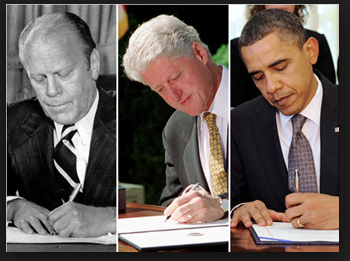
According to this article regarding left handed US Presidents, Daniel Geschwind, a professor of human genetics at UCLA says : "Six out of the past 12 presidents is statistically significant, and probably means something,"